Manufacturer · Luoyang, ChinaExport & OEM support worldwide

sales@yuboo.com English

Products / Handheld XRF & LIBS

Two methods.
One handheld decision.

XRF for non-destructive alloy identification, PMI, and scrap sorting. LIBS for aluminium grades, carbon in steel, and lithium in geochemical samples. Choose the method first, then the model and calibration.

01 / Method selection

XRF or LIBS?

Both are field methods. XRF is the faster route to non-destructive alloy ID and PMI. LIBS reaches light elements — aluminium grades and carbon in steel — that XRF cannot answer well.

XRF

Non-destructive alloy ID.

Point at the material and read the grade. No cutting, no sample preparation, and no damage to the part.

  • Incoming alloy verification and PMI
  • Scrap sorting and material segregation
  • Coatings, precious metals, RoHS, and soil

Limit: carbon is not measured; light elements such as Mg, Al, Si, S, and P depend on the model and calibration.
LIBS

Light elements in the field.

A focused laser reads the material at the surface. It is the practical handheld route to aluminium grades and carbon in steel.

  • Aluminium 1–8 series grade identification
  • Carbon in stainless, alloy, and carbon steel
  • Lithium and geochemical elements in rocks and soils
  • Fast sorting and PMI where a clean spot can be prepared

Note: carbon measurement uses argon; surface condition and a clean measurement spot matter.

For quantitative melt chemistry, final chemistry, or trace-element verification, use a benchtop direct-reading OES.

02 / Handheld XRF

Screen without
cutting the part.

Three XRF platforms for alloy identification, scrap sorting, PMI, and incoming inspection. The right choice depends on the alloy family, the elements, and the required speed.

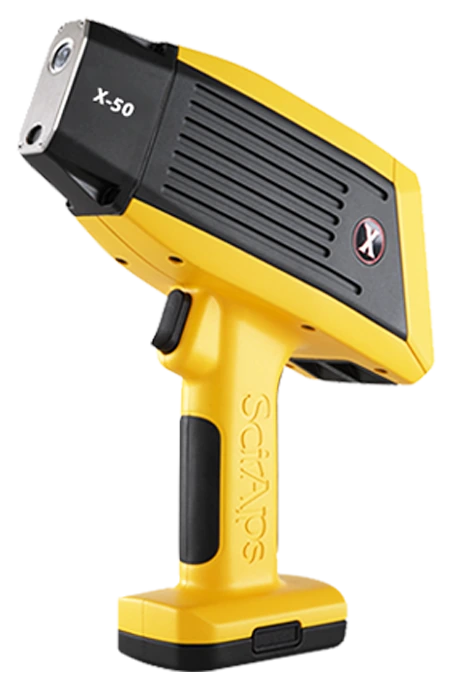
SciAps X-50 handheld analyzer

XRF / Alloy screening

SciAps X-50

A small-spot XRF for alloy identification where magnesium, aluminium, silicon, sulphur, and phosphorus are not required. Fast, non-destructive screening for incoming material, coatings, and precious metals.

Method
XRF · 7 mm² SDD
Weight
1.4 kg
Excitation
4 W · 40 kV Rh
Spot size
3.5 mm
Resolution
190 eV FWHM
Coverage
Ti–Bi and heavy elements

Best forAlloy ID, coatings, precious metals, and RoHS screening — not the choice when Mg, Al, Si, S, or P matter.

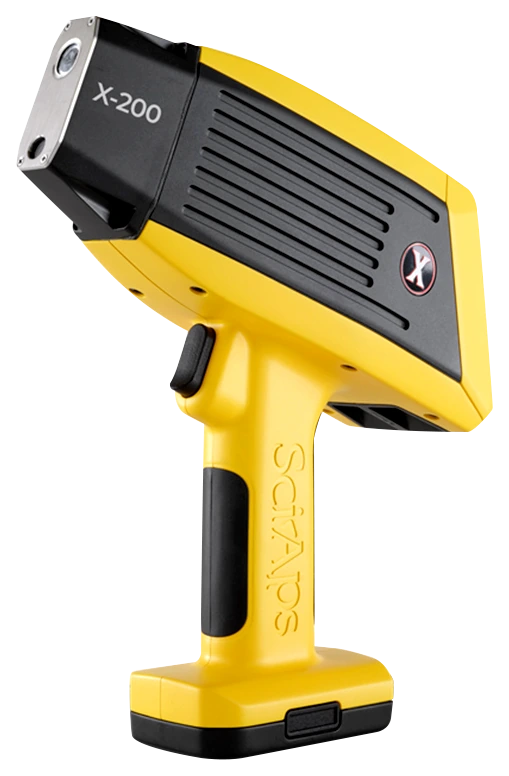
SciAps X-200 handheld analyzer

XRF / Alloy families

SciAps X-200

A faster SDD platform with a 6–50 kV tube for all alloy families, including aluminium. Built for scrap sorting, positive material identification, and high-throughput incoming inspection.

Method
XRF · 20 mm² SDD
Weight
1.4 kg
Excitation
6–50 kV · 200 µA
Target
Rh / Au
Resolution
135 eV FWHM
Coverage
All alloy families incl. Al

Best forScrap sorting, PMI, and alloy identification where aluminium and a wider element set matter.

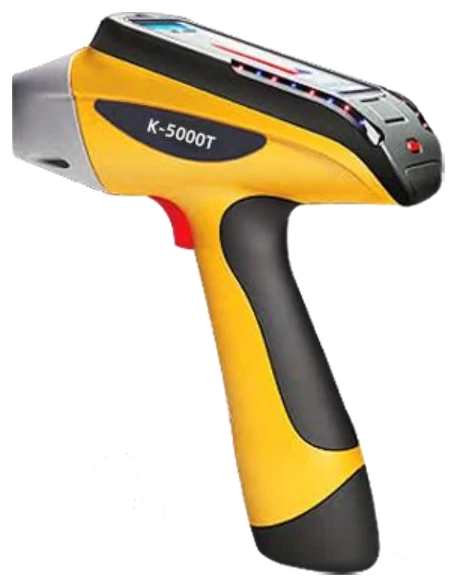
K-5000T handheld analyzer

XRF / Mg–U coverage

K-5000T

A portable XRF with Mg-to-U element coverage, a 270° rotating screen, and a large battery. Suited to alloy verification in the warehouse, at the machine, or on site.

Method
XRF · Mg–U
Weight
1.7 kg
Excitation
50 kV · 200 µA Rh
Measurement
1–60 s
Battery
9000 mAh · 12 h
Size
244 × 90 × 330 mm

Best forAlloy ID, precious metals, pressure vessels, scrap recycling, and aerospace material verification.

03 / Handheld LIBS

Reach the light
elements.

Three LIBS platforms for the questions XRF cannot answer: aluminium grades, carbon in steel, and lithium in geochemical samples.

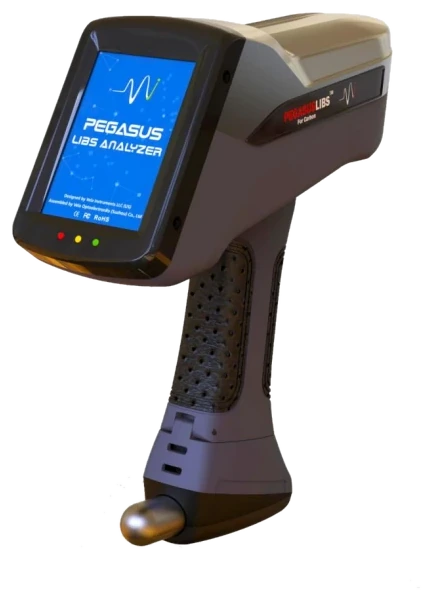
Y-300 handheld analyzer

LIBS / Aluminium

Y-300

A handheld LIBS for aluminium alloy grades. One-second grade identification and element display, with a compact body for warehouse and production-floor sorting.

Method
LIBS · 1064 nm
Weight
1.8 kg
Coverage
Al 1–8 series
Measurement
≈ 1 s
Screen
4-inch touchscreen
Protection
IP54

Best forAluminium grade ID, recycled aluminium sorting, and PMI of aluminium components.

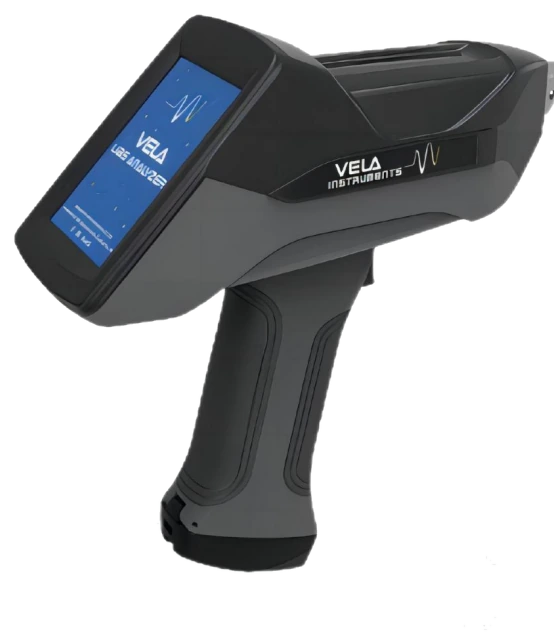
Y-400 handheld analyzer

LIBS / Carbon in steel

Y-400

A carbon-capable LIBS for steel and special alloys. Carbon is measured in 6–8 seconds; other alloying elements are displayed in about one second. Carbon measurement uses argon.

Method
LIBS · 1064 nm
Weight
1.8 kg
Carbon
6–8 s
Other elements
≈ 1 s
Bases
Stainless · alloy · carbon steel
Sample
Block / chip / foil

Best forCarbon verification in stainless, alloy, and carbon steels, plus incoming and PMI checks.

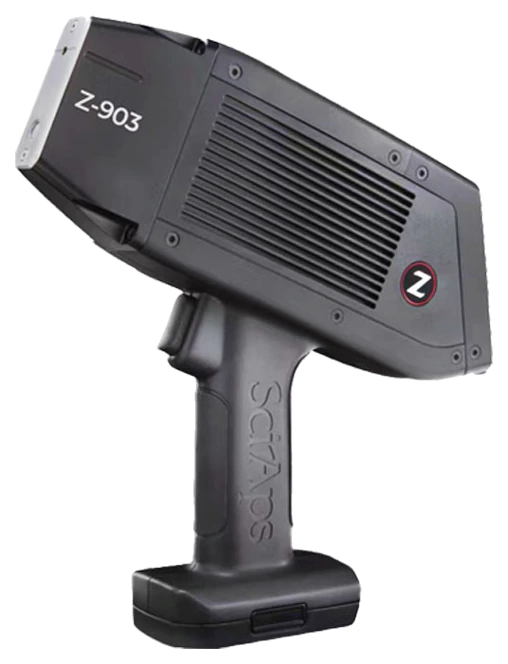
SciAps Z-903 handheld analyzer

LIBS / Lithium

SciAps Z-903

A handheld lithium and geochemical LIBS with 190–950 nm coverage. It measures lithium and a broad element set in rocks, soils, ceramics, and other non-metallic samples.

Method
LIBS · 1064 nm
Range
190–950 nm
Elements
H–U including Li
Measurement
1–10 s
Laser
5–6 mJ · 50 Hz
Screen
3.5-inch touchscreen

Best forLithium-bearing rocks, soils, ceramics, and geochemical exploration.

04 / Configuration

Start with the material,
not the model number.

Tell us the alloy, the elements, the sample form, and the decision. We will confirm whether XRF or LIBS fits, which model is the practical choice, and what the calibration must cover.

Request a handheld configuration